Dynamic Range Performance –
Commercial CCTV systems are often installed in challenging lighting environments where image quality can vary dramatically throughout the day.
Businesses in Shipley regularly experience CCTV issues caused by:
- bright entrances
- loading bay sunlight
- reflective surfaces
- glass-fronted reception areas
- and mixed indoor/outdoor lighting
This is why dynamic range performance has become increasingly important within modern commercial CCTV systems.
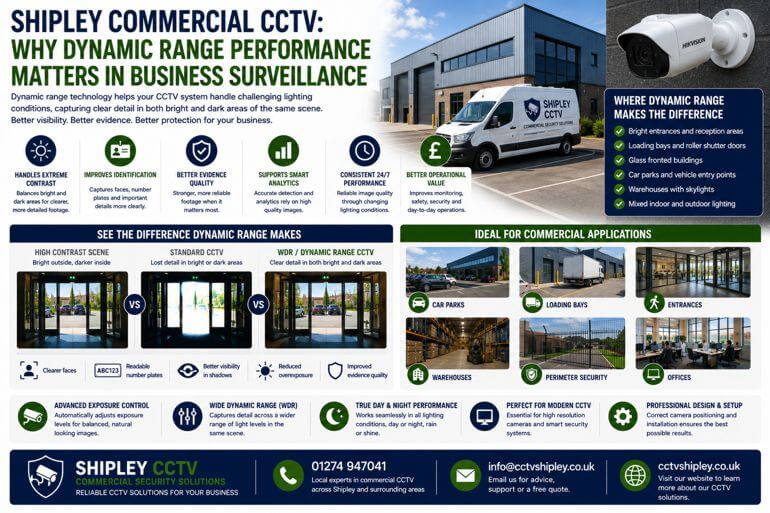
Without proper dynamic range capability, cameras may struggle to capture useful detail when scenes contain both:
- very bright areas
- and dark shadowed areas
at the same time.
What Is Dynamic Range in CCTV?
Dynamic range refers to a camera’s ability to handle extreme differences between:
- light
- shadow
- brightness
- and contrast
within the same image.
Modern CCTV cameras often use:
- Wide Dynamic Range (WDR)
- smart image balancing
- and advanced exposure control
to improve visibility in difficult lighting conditions.
Bright Entrances Commonly Create CCTV Problems
Commercial buildings frequently contain:
- glass doors
- reception areas
- and customer entrances
where strong daylight enters from outside.
Without proper dynamic range performance:
- faces may appear dark
- backgrounds may become overexposed
- or identification quality may reduce significantly
Warehouses and Industrial Premises Often Have Mixed Lighting
Industrial environments commonly contain:
- skylights
- roller shutter doors
- loading bays
- and uneven internal lighting
These conditions can create major contrast differences within the same camera scene.
Dynamic range technology helps maintain:
- clearer detail
- better visibility
- and improved identification quality
across these environments.
Vehicle Entry Points Benefit Strongly
Commercial CCTV systems often monitor:
- car parks
- gates
- delivery areas
- and vehicle entrances
Changing sunlight conditions can make:
- number plates difficult to read
- vehicles appear silhouetted
- or facial detail harder to capture
Improved dynamic range helps stabilise image quality throughout the day.
Dynamic Range Supports Better Evidence
Commercial CCTV is often relied upon for:
- investigations
- incident review
- and evidential footage
Poor lighting performance can severely reduce the value of recorded footage during critical events.
Internal and External Coverage Requires Different Exposure Handling
Modern commercial systems frequently combine:
- indoor cameras
- external perimeter cameras
- and transitional areas
where lighting changes constantly.
Good dynamic range performance helps cameras adapt more effectively between:
- bright daylight
- shaded areas
- and lower-light environments
Smart Analytics Depend on Good Image Quality
Modern CCTV analytics such as:
- facial detection
- human recognition
- and vehicle identification
perform more reliably when image exposure remains balanced.
Overexposed or underexposed footage can reduce:
- analytic accuracy
- motion detection quality
- and alert reliability
Camera Positioning Still Matters
Even cameras with advanced WDR capability still require:
- proper positioning
- suitable mounting height
- and careful scene planning
Poor camera placement may still create:
- glare
- excessive backlighting
- or unnecessary reflection problems
Modern Commercial CCTV Is About Consistency
Businesses increasingly expect CCTV systems to provide:
- reliable daytime visibility
- strong overnight performance
- and stable image quality throughout changing conditions
Dynamic range technology helps support this consistency.
Better Lighting Performance Improves Operational Value
Commercial CCTV is frequently used for:
- deliveries
- staff monitoring
- operational visibility
- and health and safety review
Reliable image quality across difficult lighting conditions improves the usefulness of footage beyond security alone.
Commercial CCTV Must Handle Real-World Lighting Conditions
For businesses in Shipley, effective CCTV systems must perform reliably in constantly changing environments rather than only under ideal conditions.
Strong dynamic range performance helps provide:
- clearer identification footage
- improved visibility
- stronger evidential quality
- and more reliable commercial surveillance
As CCTV technology advances, lighting performance is becoming just as important as camera resolution itself.
Frequently Asked Questions
What is Wide Dynamic Range in CCTV?
It helps cameras balance bright and dark areas within the same image for clearer visibility.
Why is dynamic range important for businesses?
Commercial premises often contain difficult lighting conditions that can affect footage quality.
Can WDR improve identification footage?
Yes. It can improve facial detail and visibility in challenging lighting environments.